In search of water on the Moon
N7 Space has partnered with Kayser Italia to supply and adapt boot software for the Exploration Mass Spectrometer (EMS-L) instrument for the LUPEX lunar mission, which aims to investigate the presence of water at the south pole of the silver globe.
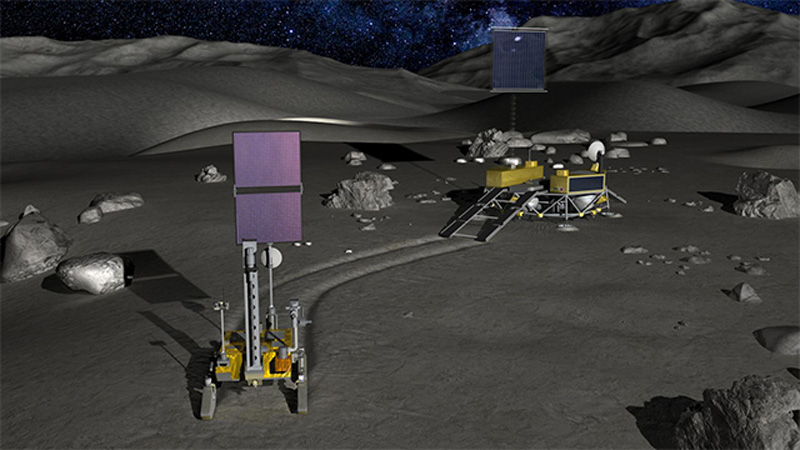
The Lunar Polar Exploration (LUPEX) mission, also known as Chandrayaan-5, is a joint initiative of the Indian Space Research Organization (ISRO) and the Japan Aerospace Exploration Agency (JAXA), carried out in cooperation with the European Space Agency and NASA. The mission scenario involves launching a lunar lander with a launch mass of approximately 6.5 tons, supplied by ISRO, on board a Japanese H3 rocket, carrying a rover weighing approximately 350 kg developed by JAXA. The latter’s task will be to study the quantity and quality of water that is believed to accumulate in dark regions of the Moon that never receive sunlight (known as permanently shadowed regions, PSRs). The rover will become a mobile platform for a total of 10 scientific instruments, including a mass spectrometer provided by ESA to perform in-situ measurements of the pressure and chemical signature of the lunar exosphere. These measurements, thanks to the analysis of gases released during drilling in the regolith performed by the rover, will allow, among others, the detection of water located at a depth of up to 1.5 meters below the surface of the Moon.
Kayser Italia is the Prime Contractor of the EMS-L instrument, whose development is commissioned by the European Space Agency (ESA). As part of its cooperation with Kayser Italia, the EMS-L developer and integrator company, N7 Space will supply mission-modified qualified bootloader software along with a board support package (BSP).
– Bootloaders are relatively small software components, but they have a big responsibility: they must initialize and test the hardware, and then launch the rest of the software necessary to accomplish the mission objectives. Whenever we hear that a mission has been saved thanks to a software update, it means that a bootloader has just done its job – explains Konrad Grochowski, Software Engineer at N7 Space and leader of the LUPEX BSW project. – In this mission, we have the opportunity to verify the portability of our solution once again – each implementation to date has required a number of mission-specific changes. However, for the first time, instead of the ECSS (European Cooperation for Space Standardization) and CCSDS standards that we are familiar with, we must adapt to the protocols and mechanisms employed by JAXA which are utilizing custom protocols based on SpaceWire. Undoubtedly, working with the requirements of the Japanese space agency is one of the most difficult, but also one of the most interesting challenges in this project.
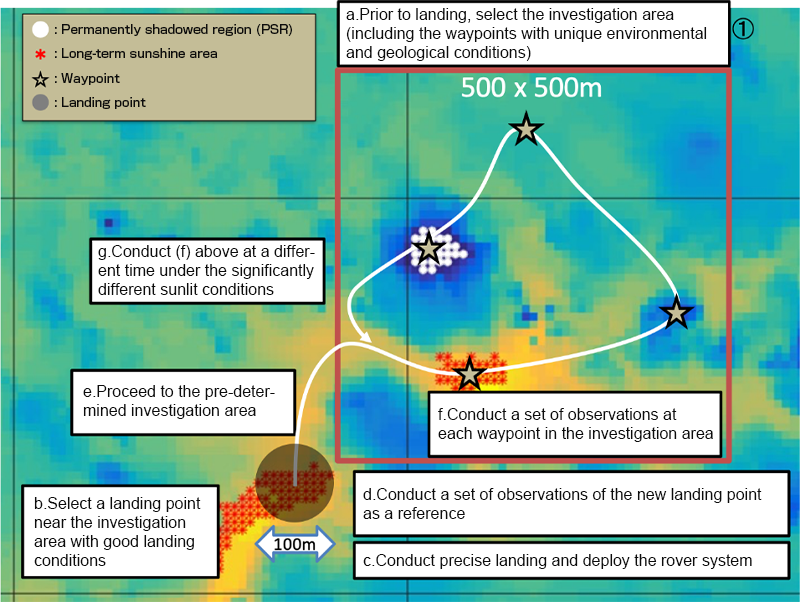
The increased interest of space agencies around the world in searching for water on the Moon is primarily related to the fact that the gases produced by hydrolysis, i.e., oxygen and hydrogen, are used, among other things, in the production of rocket fuel. In this context, confirming the presence of water in sufficient quantity and quality beneath the Moon’s surface will be an extremely important milestone both in the exploration of the Moon and potentially in the development of future manned missions, e.g., to Mars, reducing the need to supply key resources from Earth.
The launch of the LUPEX mission is expected in 2028.